" transform="translate(1 1)" width="4.5px"/></svg>)
Case Study
Deployment in Active Wildfire Conditions
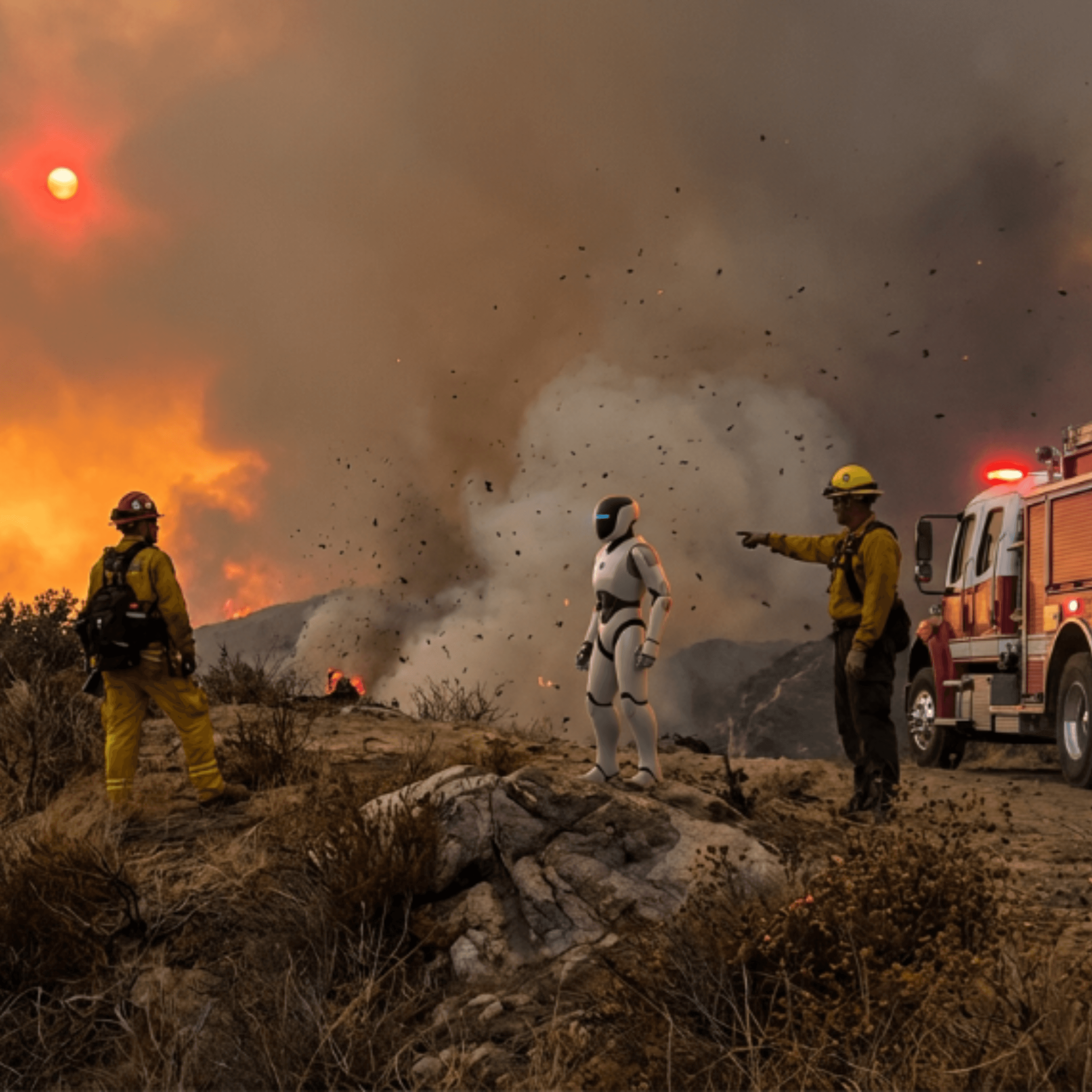
AEVA mission was to perform continuous scanning for flare-ups, monitor temperature variations, and support firefighters with extended visibility across difficult and smoke-heavy terrain.
" transform="translate(10 10)" width="12px"/><path d="M 0 6.5 L 0 0" fill="transparent" height="6.5px" id="fh7ZTGzzS" stroke-dasharray="0" stroke-linecap="butt" stroke-linejoin="miter" stroke-miterlimit="4" stroke-width="1" stroke="rgb(255, 255, 255)" transform="translate(16 0)" width="1px"/><path d="M 0 6.5 L 0 0" fill="transparent" height="6.5px" id="QFYR8kQdw" stroke-dasharray="0" stroke-linecap="butt" stroke-linejoin="miter" stroke-miterlimit="4" stroke-width="1" stroke="rgb(255, 255, 255)" transform="translate(28 13) rotate(90 0.5 3.25)" width="1px"/><path d="M 0 6.5 L 0 0" fill="transparent" height="6.5px" id="Ht4u8inT9" stroke-dasharray="0" stroke-linecap="butt" stroke-linejoin="miter" stroke-miterlimit="4" stroke-width="1" stroke="rgb(255, 255, 255)" transform="translate(3 13) rotate(90 0.5 3.25)" width="1px"/><path d="M 0 6.5 L 0 0" fill="transparent" height="6.5px" id="CJqdazkvF" stroke-dasharray="0" stroke-linecap="butt" stroke-linejoin="miter" stroke-miterlimit="4" stroke-width="1" stroke="rgb(255, 255, 255)" transform="translate(16 25)" width="1px"/></svg>)
Deployment in Active Wildfire Conditions
Twenty AEVA units were positioned across a designated lookout ridge in Southern California during an active wildfire event. The assignment required continuous visual scanning, thermal monitoring, and hazard assessment under changing wind patterns and reduced visibility. AEVA units were deployed alongside human firefighters to expand situational awareness across difficult terrain.
Consistent Monitoring With Zero Drift
Throughout the 6-hour and 12-minute mission, all AEVA units maintained full stability on uneven ground and operated without sensor drift, overheating, or performance degradation. The robots tracked smoke plumes, monitored temperature spikes, and flagged two early-stage flare-ups using their integrated thermal and depth-detection systems. No operator interventions were required during the deployment.
Enhanced Safety and Faster Response Capability
Firefighters reported improved perimeter visibility and earlier detection of risk zones, enabling faster decision-making at the fireline. AEVA’s ability to operate in smoke, heat, and unstable footing reduced human exposure during high-risk periods. The field team validated AEVA as a reliable force multiplier in wildfire monitoring scenarios, supporting safer and more efficient coordination during critical operations.
AEVA extended our visibility when conditions were at their worst. The early flare-up alerts gave us critical minutes we wouldn’t have had otherwise.
Captain L. Moreno
Wildland Ops. CA Fire Division