" transform="translate(1 1)" width="4.5px"/></svg>)
Testing autonomy where conditions are least forgiving
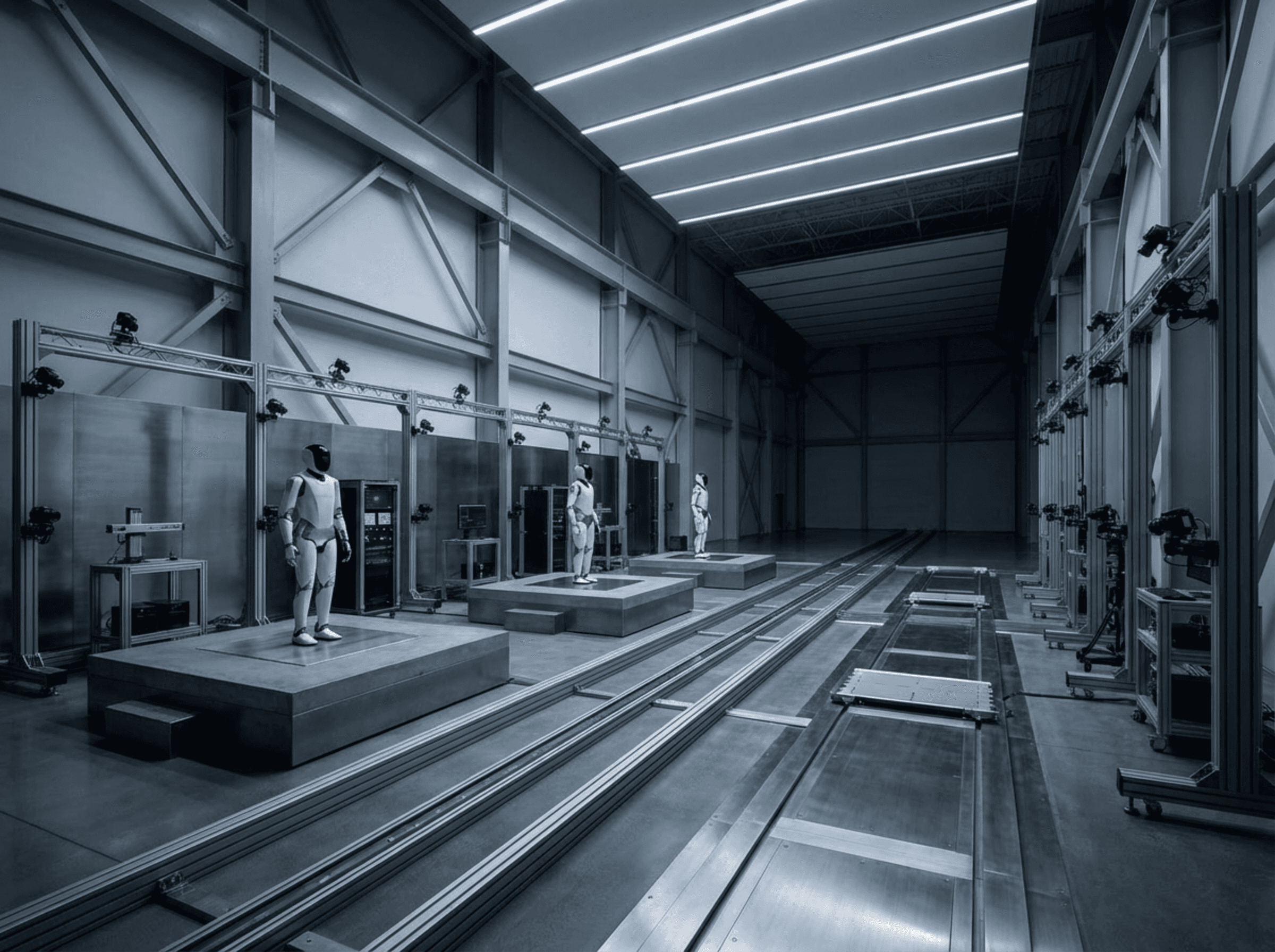
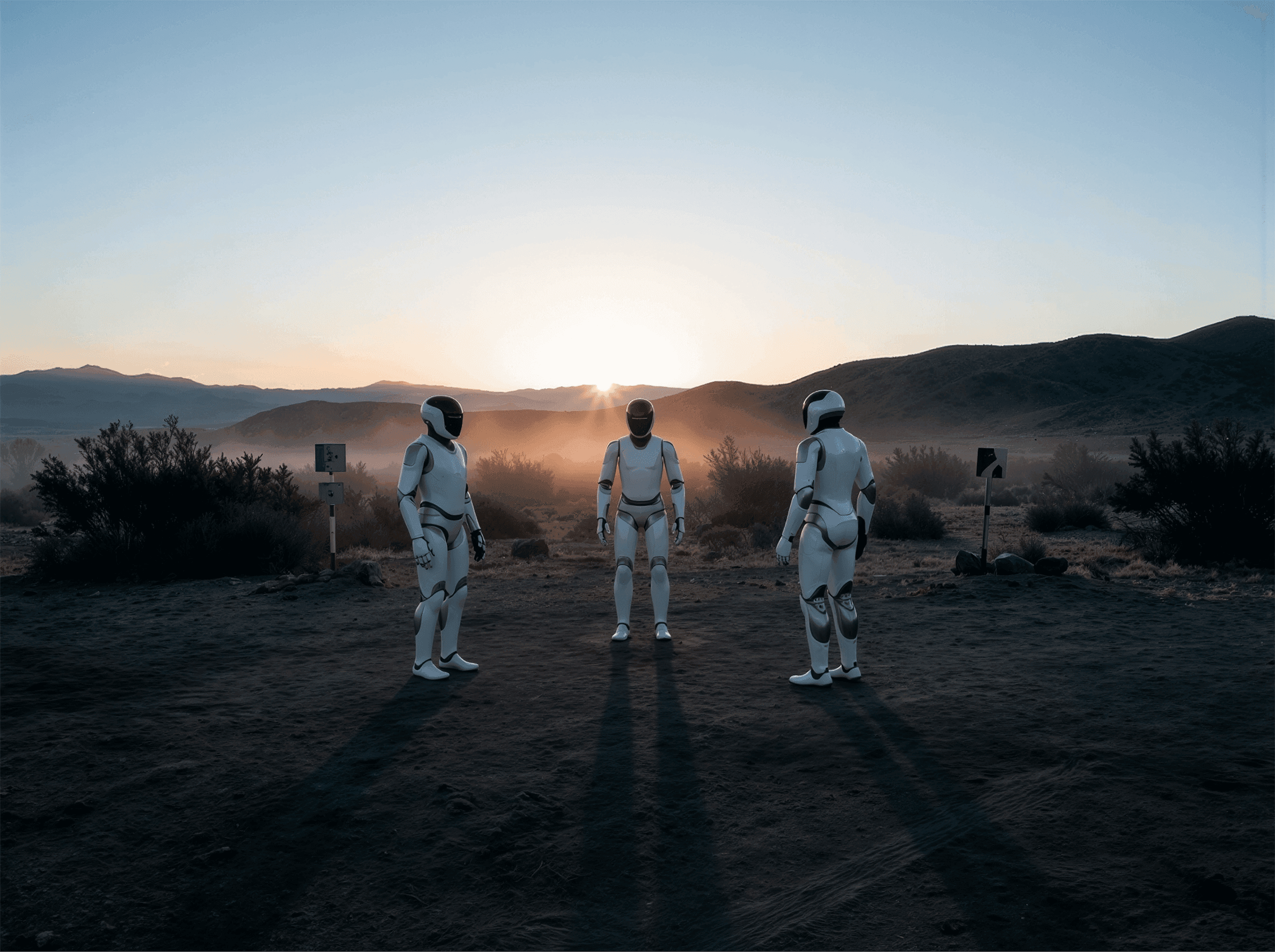
AEVA Systems has carried out a full-scale field readiness test in the Mojave Desert, expanding its validation work beyond controlled labs and structured indoor environments. The objective was straightforward: verify that the AEVA-UNIT 079-E7 platform maintains the same posture stability, task consistency and controlled behaviour in harsh outdoor conditions as it does in kitchens, offices or private homes.
The Mojave was selected for its combination of high heat, abrasive dust, long visual horizons and uneven terrain — conditions that expose weaknesses quickly and offer little margin for improvisation.
Heat, dust and long-range gait assessment
The test focused on three critical systems.
The first was thermal resilience. With temperatures climbing above 38 degrees Celsius during midday, engineers evaluated how AEVA’s cooling system regulated internal load under continuous operation.
The second track focused on dust ingress. The desert environment challenges seals, joints and optical housings in ways indoor settings never do. AEVA’s component-based modules were monitored for dust accumulation and pressure variation after extended movement cycles.
The third area centered on long-range gait stability. Over several kilometers of mixed terrain, AEVA units were tested for zero-drift walking, incline handling, and micro-corrections when navigating loose sand and gravel. Early data indicates that drift remained negligible and step-to-step variation stayed within expected tolerances.
Formation testing and sustained autonomy
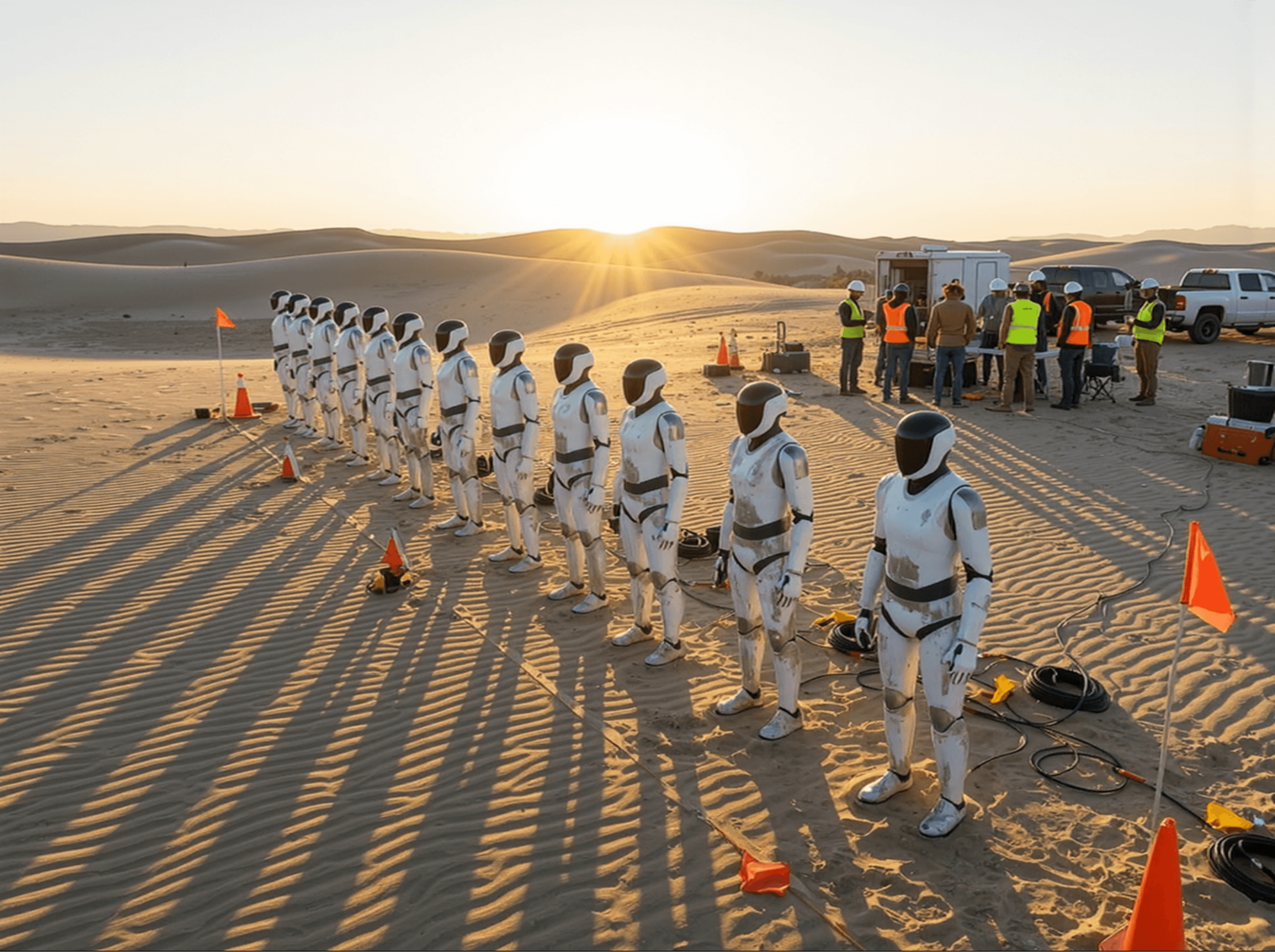
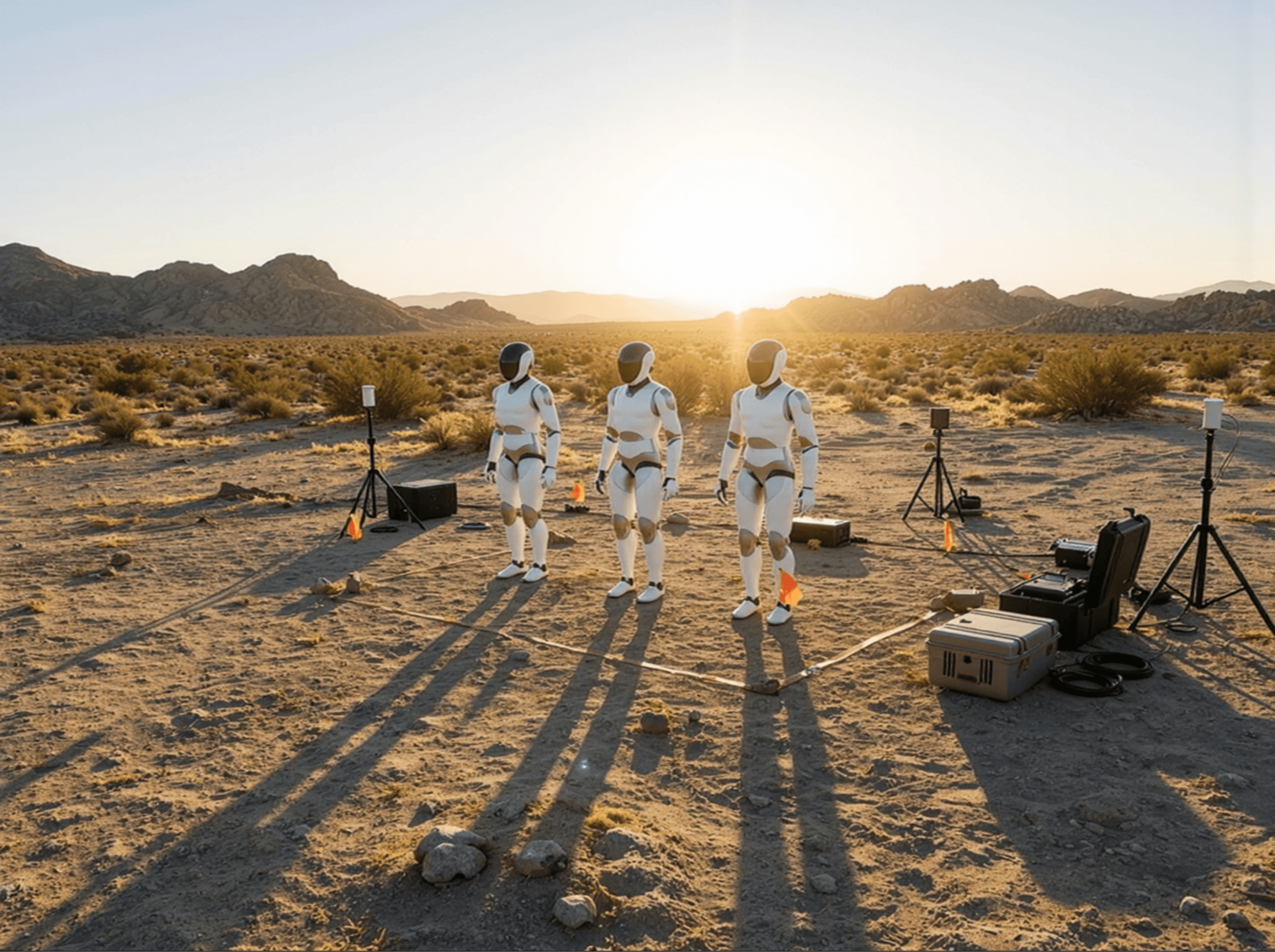
Part of the evaluation involved coordinated formation movement across defined paths marked with ground indicators. The goal was to verify that multiple AEVA units could maintain controlled spacing and consistent behaviour without improvisational decision-making. The deterministic engine performed as expected, with units maintaining formation despite shifting ground textures and low-contrast visual cues caused by the morning haze.
Engineers also conducted extended-duration autonomy tests, measuring how the units handled low-speed patrol-style tasks while maintaining energy efficiency and environmental awareness across broad, unobstructed spaces.
Preparing AEVA for future outdoor deployments
AEVA emphasized that these tests are not the precursor to speculative or militarized applications. Instead, the Mojave campaign supports real civilian use cases: wildfire monitoring, high-heat inspection work, long-range environmental assessment and other scenarios where predictable, non-theatrical behaviour is more important than speed or range.
The field readiness test marks one of AEVA’s most demanding outdoor evaluations to date. Results will feed directly into sensor housing improvements, gait algorithm refinements and thermal management updates across the AEVA-UNIT 079-E7 platform.
" transform="translate(10 10)" width="12px"/><path d="M 0 6.5 L 0 0" fill="transparent" height="6.5px" id="fh7ZTGzzS" stroke-dasharray="0" stroke-linecap="butt" stroke-linejoin="miter" stroke-miterlimit="4" stroke-width="1" stroke="rgb(255, 255, 255)" transform="translate(16 0)" width="1px"/><path d="M 0 6.5 L 0 0" fill="transparent" height="6.5px" id="QFYR8kQdw" stroke-dasharray="0" stroke-linecap="butt" stroke-linejoin="miter" stroke-miterlimit="4" stroke-width="1" stroke="rgb(255, 255, 255)" transform="translate(28 13) rotate(90 0.5 3.25)" width="1px"/><path d="M 0 6.5 L 0 0" fill="transparent" height="6.5px" id="Ht4u8inT9" stroke-dasharray="0" stroke-linecap="butt" stroke-linejoin="miter" stroke-miterlimit="4" stroke-width="1" stroke="rgb(255, 255, 255)" transform="translate(3 13) rotate(90 0.5 3.25)" width="1px"/><path d="M 0 6.5 L 0 0" fill="transparent" height="6.5px" id="CJqdazkvF" stroke-dasharray="0" stroke-linecap="butt" stroke-linejoin="miter" stroke-miterlimit="4" stroke-width="1" stroke="rgb(255, 255, 255)" transform="translate(16 25)" width="1px"/></svg>)